
No products in the cart.
Return To Shop
It was a crisp winter’s day when I decided to visit this ‘Poet’s Land of Sand, Mines and Mountains’ shortly before the third lockdown. By the time I eventually managed to drag myself away from the town long past sunset, I was buzzing with enthusiasm and ideas for tours, as well as having found and bought a coal hod from a charmingly traditional hardware shop: a bizarre souvenir, I know, but I’d been looking for a design I liked for years, and it seemed hugely appropriate to buy my perfect ‘hod’ from the town that’s home to the RSPB’s Hodbarrow Nature Reserve, once the site of the largest iron mine in the world.
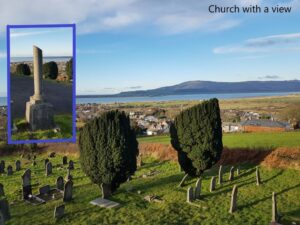
Millom is about an hour’s drive from the M6 motorway by the scenic route that I took, and what a drive it was. I approached from the Barrow direction to get the amazing views of the town with the spire of St George’s church clearly visible across the Duddon Estuary. On the way I couldn’t resist jumping out of the car and wandering down to Roanhead Beach with its impressive sand dunes. Further up the coast I spotted Ireleth and Askam’s St Peter’s Church perched up above the road, again well worth a walk up the brow – not just for the view, but also for some interesting memorials in the churchyard. When I went in, my eye was drawn immediately to two broken pillars, symbols of a life cut short – if you share my fascination with the meanings and significance of ‘tombstone art’, I found this article really interesting. Church names also give us clues about an area – as I drove through Kirkby-in-Furness I spotted signs to St Cuthbert’s church; this must surely have been one of the places where monks rested with St Cuthbert’s coffin when they were fleeing from Viking marauders attacking the island of Lindisfarne off the northeast coast?
After all my scenic diversions, I eventually wound my way past Millom Castle and the Millom Discovery Centre at the railway station to end up at the square, where I met up with Millom resident and Blue Badge Guide Tom McCafferty. To get the most from my visit, I had done lots of research to find out about the history of the area, but today I wanted to get a real feel for the town and pinpoint why I’d like to bring visitors from Britain and abroad to Millom. By the end of the day, I know exactly what it is about the town that visitors will love.
The people
Tom introduced me to some lovely people who are passionate about their town. As a guide, it’s important that I have a good knowledge of a place, but what is equally important is a warm and friendly welcome.
Art and literature
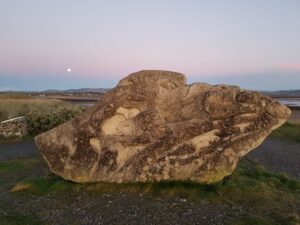
If you’re not familiar with the works of Millom-born Norman Nicholson, I can’t recommend him highly enough. He loved his home town, his prose and poetry about the whole of our beautiful county is inspirational, and when I’m guiding visitors in Cumbria, I frequently quote from his anthology. I wish I had been at Haverigg Beach at the end of October to see the Norman Nicholson ‘sand graffiti’ project organised by local artist, Irene Rogan. Whilst I stood admiring the fine Josefina de Vasconcellos sculpture by the beach at sunset on the day of my visit, I was imagining the words of Norman Nicholson’s “Sea to the West” poem gently being erased by the tide on the same beach.
Historic interest
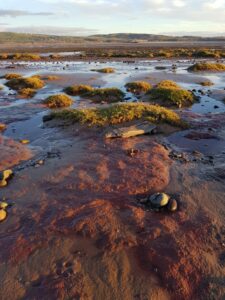
Millom’s industrial heritage is simply fascinating, and I loved seeing the red colour of the sand on the beach and the red mud as I walked through the site of the old mine, reminding me of the town’s importance at the time of the industrial revolution. The grand buildings in the town centre tell a story in themselves.

Views and walks
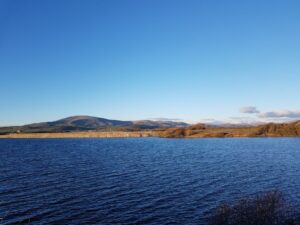
My walk around the lagoon started at HerdwickS, a building dating back to 1873, which was once home to the Hodbarrow mining headquarters. Next time I’m in Millom, I’ll certainly be going back: traditional pizza oven; wood stoves; great views over the lagoon; luxurious boutique bedrooms… what’s not to like?! It took me just over two hours to walk round the sea wall enclosing the lagoon, along the beach where the port used to be from which the iron used to be shipped, and then back to town through the Iron Works nature reserve. What a beautiful walk it was, with views back across the Duddon Estuary to the coast I had driven along earlier in the day.
Millom today
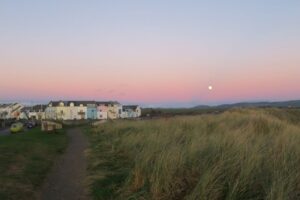
The town is brimming with positive vibes, and the day I was there, this article appeared in the local paper: https://www.nwemail.co.uk/news/18972267.miles-unspoilt-beaches-panoramic-views-charming-feel-times-past-millom-community-move/. The independent shops and restaurants, including a brand new fish and chip shop, are a real draw, as is the Millom Discovery Centre, which I visited last time I was here (closed at the time of writing due to COVID-19 restrictions). As a tourist guide always mindful of visitor comfort, it was also good to spot a key visitor facility – public toilets!
Join me on a virtual tour
I thoroughly enjoyed my whole visitor experience and can’t wait to come back after lockdown! In the meanwhile, having taken hundreds of photos, I feel well prepared to deliver a virtual tour of the town on the evening of 17th February. If you’re interested please book here.
My Millom virtual tour is one of a series of six focussing on the West Coast of Cumbria over the next couple of months. Members of the Western Lake District & Coast will receive a discount on all of them and anyone who subsequently applies for a place on the 2021-2022 Blue Badge Tourist Guide training course will receive a refund for any of my virtual tours that they join. To find out more about the course please visit Cumbria Blue Badge Guide Training Course.
Tess Pike
About author

About Author
Tess Pike
Tess Pike is a qualified guide for Cumbria, Yorkshire, North East England, and Liverpool City Region. She speaks English and fluent German.
She loves her job as much today as she did 30 years ago, when she first trained in Cumbria. She sees guides as storytellers, who weave the history, geology, literature, legends, and landscapes of a place into an engaging commentary. She enjoys introducing visitors to destinations and landscapes that they may already feel they know through books or film.
She lives in Kirkby Lonsdale – well placed to welcome visitors to the Lake District and Yorkshire Dales National Parks.
Email. Tess.Pike@btinternet.com
Other posts by Tess Pike