
No products in the cart.
Return To Shop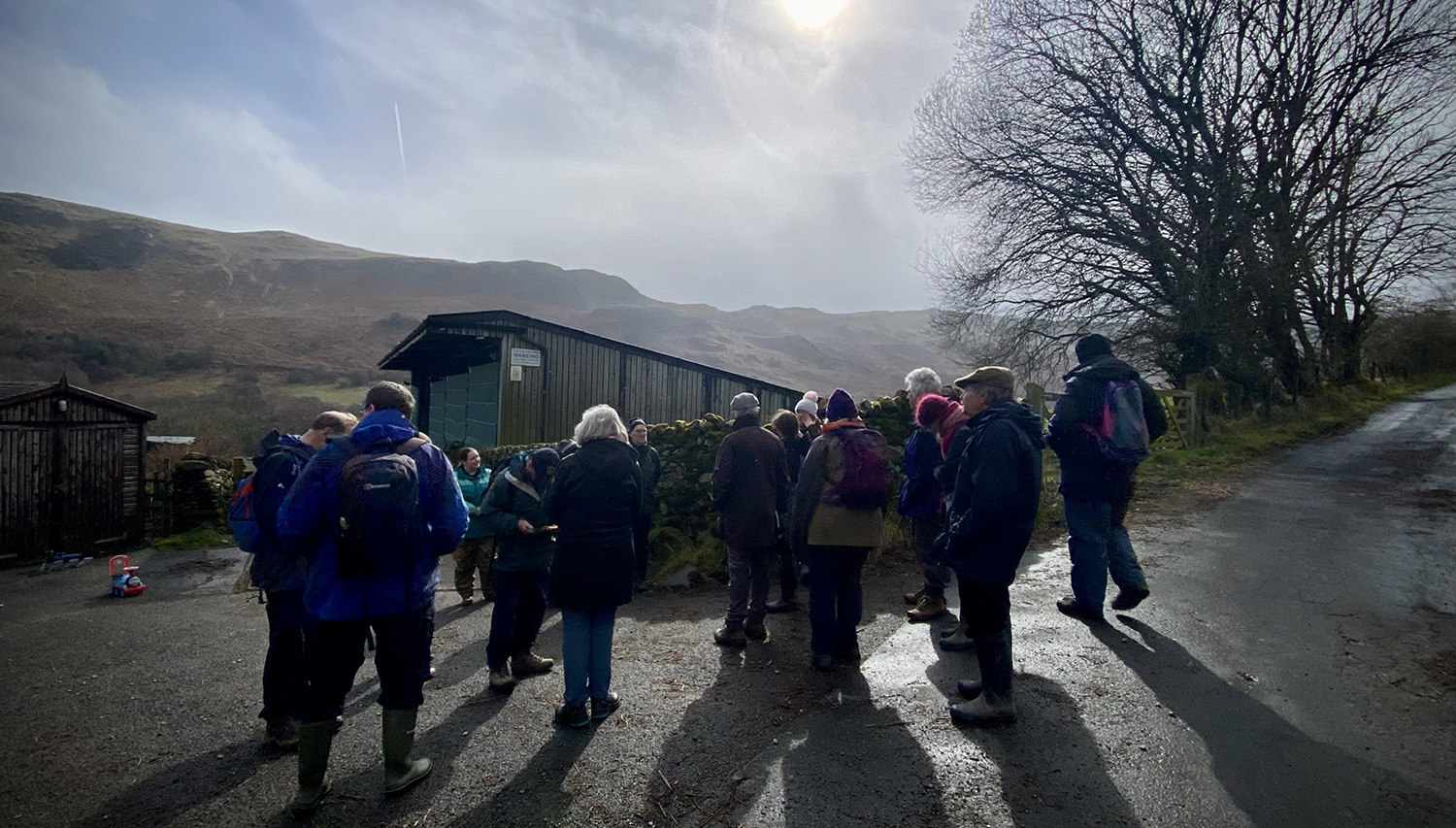
An inspiring and insightful day spent in the Naddle and Swindale valleys learning about conservation management and the work of the RSPB at their farm base of Naddle farm in the company of Annabel Rushton the RSPB Visitor Experience manager along with residential volunteer Cat and Faith one of the RSPB farm managers and Jo and Yasmin two new nature-friendly farming apprentices.
The lease for Naddle Farm and Swindale Farms was taken on by the RSPB in 2011. They are owned by United Utilities and includes the two farms and associated enclosed and common land, totalling 30km square and which includes Naddle Forest an area of ancient Oak woodland.
Annabel explained that the fells and fields were lacking in wildlife and over grazed by sheep and deer, whilst there were species such as skylark and meadow pipits present these were the exception. Swindale beck had been straightened to aid drainage, the meadows were impoverished and the upland bogs drained. Naddle Forest, though rich in wildlife, is a fragment of what would historically existed.
The last Golden Eagle, a lone male disappeared from the area in 2015. Eagles having been part of the Cumbrian landscape for centuries denoted by old names of crags such as Heron crag, from the old English word Erne, a White Tailed Eagle.
The RSPB’s relationship with United Utilities at Haweswater started in 1969 when a watch point was set up to guard an Eagles nest as well as a public viewing point at Riggindale. Sadly the habitat or lack of fauna spelt the demise for the last breeding eagles in England as it was no longer able to support them having seen 16 chicks reared at Haweswater over that period.
The overall vision of the RSPB and United Utilities in the valleys is to help nature return to these denuded landscapes, to improve biodiversity and water quality at the same time based on a whole catchment approach demonstrating how ecological restoration can work alongside sustainable upland farming benefitting water wildlife and people.
In preventing peat erosion and ‘rewetting’ the upland landscape in raising the water table by blocking drains in bogs, flora and fauna returned whilst benefiting water quality. Species such as sundew, cotton grass and yellow bog asphodel have returned. This approach not only benefits nature but improves the carbon storage properties of the upland landscape.
To tackle overgrazing on the commons of which the RSPB have the right to three commons, they don’t exercise their grazing rights on some of these commons altogether and have reduced their own sheep numbers from somewhere around 1700 to 300 – a more sustainable number. Deer numbers are being controlled and deer fencing restricts grazing protecting more vulnerable areas.


As we toured the farm with Annabel we got an insight into the ambitious plans the RSPB have for Naddle farm including a tree nursery which is undergoing expansion and not only supplies its own land but sells native saplings to other re wilding areas at Ennerdale and Hardknott. Species such as Juniper, Holly, Aspen and the rare Downy Willow Rowan are grown here from seed collected by volunteers as well as Alpine plants which are transplanted out on to the fell side.
Other developments are to develop the visitor offer at the farm with a new engagement space, meeting rooms and a science lab by converting the former spinning barn. This will also provide shelter for passing walkers on the nearby Coast to Coast walk as well as space for bird conservation as a part of a legacy bequest.
We learned of the range of experiences offered at the farm including badger watching from the new hide being built. Third party licenced activities on the site are natural encounters where you can have breakfast or afternoon tea with Red squirrels offered by CIC Wild Intrigue, pony trekking and camps with Fell Pony Adventures.
Forest bathing and meditation with At Nature’s Pace and The Wilderness Programme offering a safe space for recovering addicts or those who’ve experienced mental Ill-health on a six-day camp.


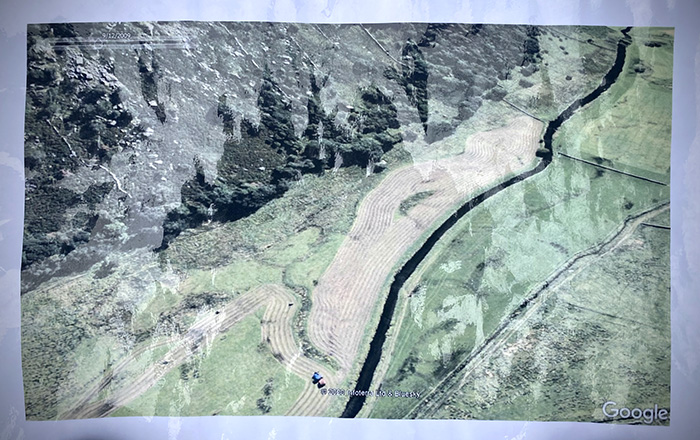
We then drove from Naddle to the nearby valley of Swindale where the RSPB farm operation is based at Swindale Foot farm to witness at first hand the ‘Rewiggling ‘of the Swindale beck. Annabel explained how the previously straightened beck channel was aimed of preventing flooding of meadows to ensure a good hay crop to feed livestock over the lean winter months.
This had the effect of washing away gravel and spawning beds but by putting ‘natural’ meanders back into the channel on the lines of pre-existing paleo channels this allowed characteristic pool and riffle formation resulting in salmon spawning within three months of completion.
The Swindale meadows are classed as a SSSI for their biodiversity value and could not be harmed by the operation, under careful management the meadows cannot be cut for hay until after the 24th July each year to allow the wildflowers to set seed.

We learnt that trees were transplanted from the nursery to the hillside on areas where bracken grows (indicating areas of former woodland) offering more protection but also that the farms 30 Scottish Highland, Belted Galloway and Luing cattle can graze and trample the bracken to help with seed germination, promoting natural regeneration.
Deer control is practiced by a full time stalker and the erection of an eight foot deer fence separating the common form the inbye land helps protect trees
The whole catchment approach, working with other landowners and commoners has not been without its detractors but the results have spoken for themselves and visiting professionals and land managers have seen the benefits and are looking to learn lessons from the practice themselves across the country and abroad. Neighbouring farmers have used grant fund to implement similar practices.
This has brought plaudits from far and wide and even European accolade but one which out-going site Manager Lee Schofield is proud of is that from a farm inspector who acknowledged the richness of the biodiversity and the quality of the sheep stock as a consequence of these conservation measures now being implement at Wild Haweswater.
Dalefoot Compost at Dalefoot Farm.
We met Jane Barker Bland who along with her husband Simon Bland tenant Dalefoot farm from United Utilities, she has been here 27 years and her husband is a third generation farmer from the dale farming 120 acres with common gazing on Bampton, Helton and Askham fells. They farm 1250 of their own sheep with 250 lambs due in April, mainly White Faced Woodland and Cheviot variety which are hefted to the upland right up to Loadpot hill we could see in the distance.
Farming was not able to sustain two generations at the same time they looked to diversify, Jane is an environmental scientist, so they looked at ways of using the land for other economic benefits utilising her skills and came up with the idea of a composting as well as an environmental contracting business.


Bracken, which is normally seen as a nuisance plant by farmers, is cut and bailed on nearby fells in July when in full frond whilst still green, it is also bought from other farmers in Wales, and is used as a base ingredient for the compost. The bracken has a high level of lignin and a high pot ash essential for fruiting and flowering and making it ideal to help break down clay soils.
As we are taken on a tour of the farm we witness piles of steaming compost in farm sheds generating a temperature of up to 70 degrees in order to sterilise any harmful bacteria. Using wool from their own farmed sheep and wool bought in from they make a unique organic peat free compost which is mixed with another ingredient, comfrey, grown on the farm and mixed with silage used as a culture to start the composting process.
The wool ensures good water retention and high levels of nitrogen and acts as a slow release fertiliser. Composted bark chippings are supplied by Jenkinson’s at Clifton are also added to dilute the base double strength product.
About author
