
No products in the cart.
Return To Shop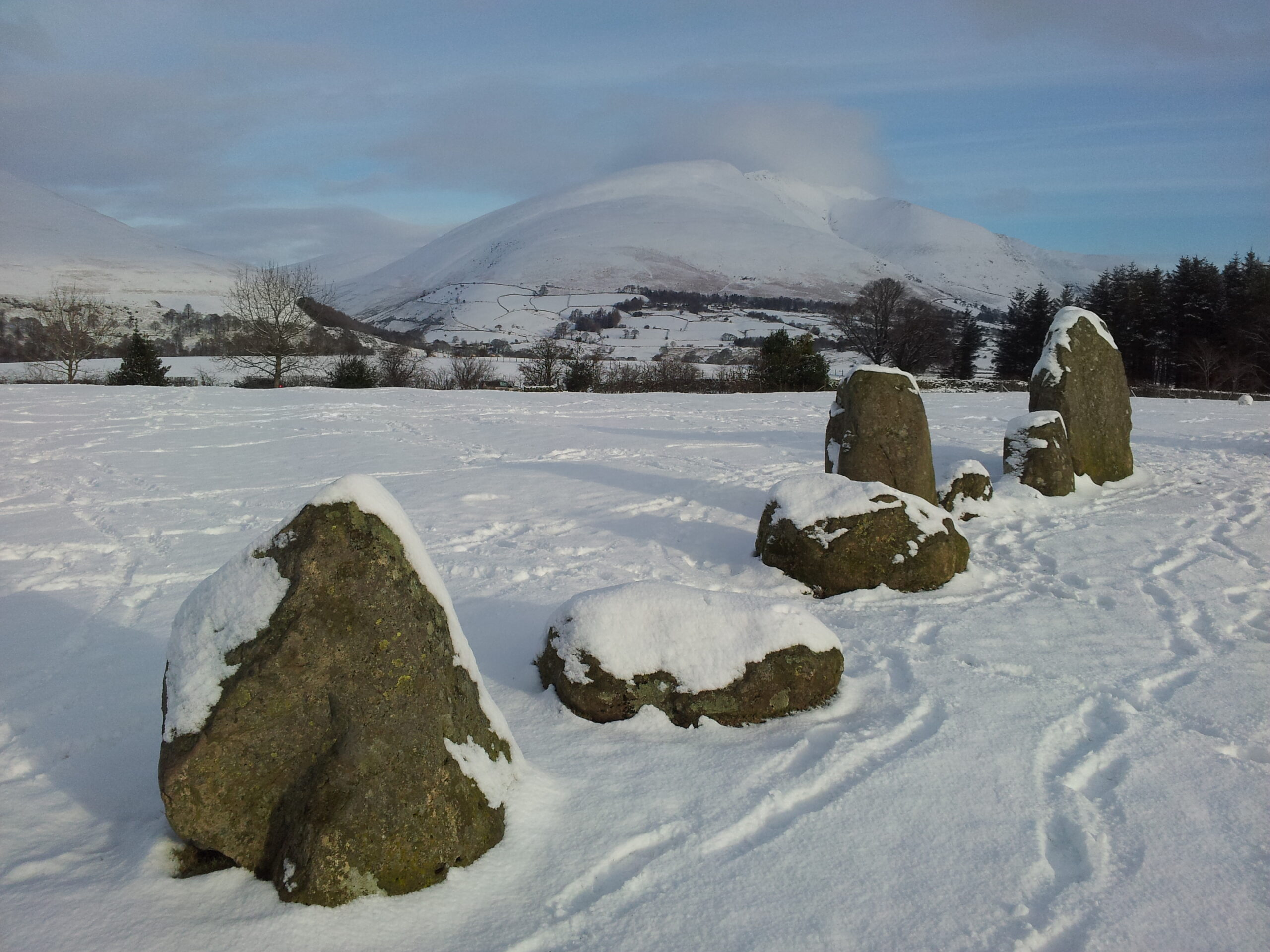
If you had visited the Lake District five thousand years ago you would have found a landscape that looks very different to the one we see today. But the roots of today’s landscape were there, fresh from the most recent glaciation, and man was about to begin his shaping of the scenery too.
The ice age had ended and the land that had been covered in ice around half a mile thick had already been colonized by plants and animals. Forest covered the mountains and valleys that we know today and wolves, bears and wild boar roamed around looking for food. In these Mesolithic times, the only humans in Cumbria were a small number of hunter gatherers who clung to the coast for survival; here they could eke out a living by catching fish and hunting birds.
But then a discovery was made that would change the lives of the people and the landscape of Cumbria forever.
High up in the Langdale fells on the side of Harrison Stickle and Pike of Stickle are Neolithic axe factories. Somehow, thousands of years ago, men managed to travel through the thick forest, up the steep mountainsides and find this one particular type of rock, a fine grained green volcanic tuff that was perfect for making axes. With this discovery, the Neolithic people could forge ahead with their revolution. These new and very effective tools could clear the forest so that Neolithic people could rear animals and grow crops. They no longer needed to move from place to place looking for food and this gave them time to do other things. They had time for art and perhaps religion and they started to build monuments and henges.

The Langdale axe factories
The most striking prehistoric remains are the many stone circles that still survive in Cumbria. Of course, like Stonehenge, no-one knows for sure why they were built but the time and effort that went into them shows us that there were sizeable communities living here and that these monuments were of extreme importance to them. Perhaps the most famous stone circle in Cumbria is Castlerigg. Part of its fame is due to the fact it is very easily accessible but this does not take away from the magnificence of the views and the drama of the stones themselves. It is thought that Castlerigg was built around four and half thousand years ago and it is unusual in that it has a smaller rectangle of stones within the main circle.

Castlerigg Stone Circle
There are many other, less well-known, circles and monuments and many of them have no signposting and no obvious significance but that is almost as a result of their sheer numbers. A quick look at any Ordnance Survey map of the Lake District soon shows these prehistoric monuments for the adventurous walker to go and investigate. Many of them are difficult to find in summer when the bracken is high and vegetation hides the distinctive lumps and bumps on the ground but if you head out in the spring with a map and compass you can discover hundreds of burial cairns and stone circles that have no paths to them and often feel as though they have not been visited for hundreds of years. One of my personal favourites involves a leisurely walk over Birkrigg Common – the views over Morecambe Bay are fantastic and you can visit one of Cumbria’s lesser known stone circles, known as Sunbrick Stone Circle. Having worked up a bit of an appetite you should then pop into nearby Ulverston, a lovely market town with cobbled streets, and head for lunch in Gillams, one of the Hairy Bikers’ favourite cafes.

Sunbrick Stone Circle on Birkrigg Common.
About author
