
No products in the cart.
Return To Shop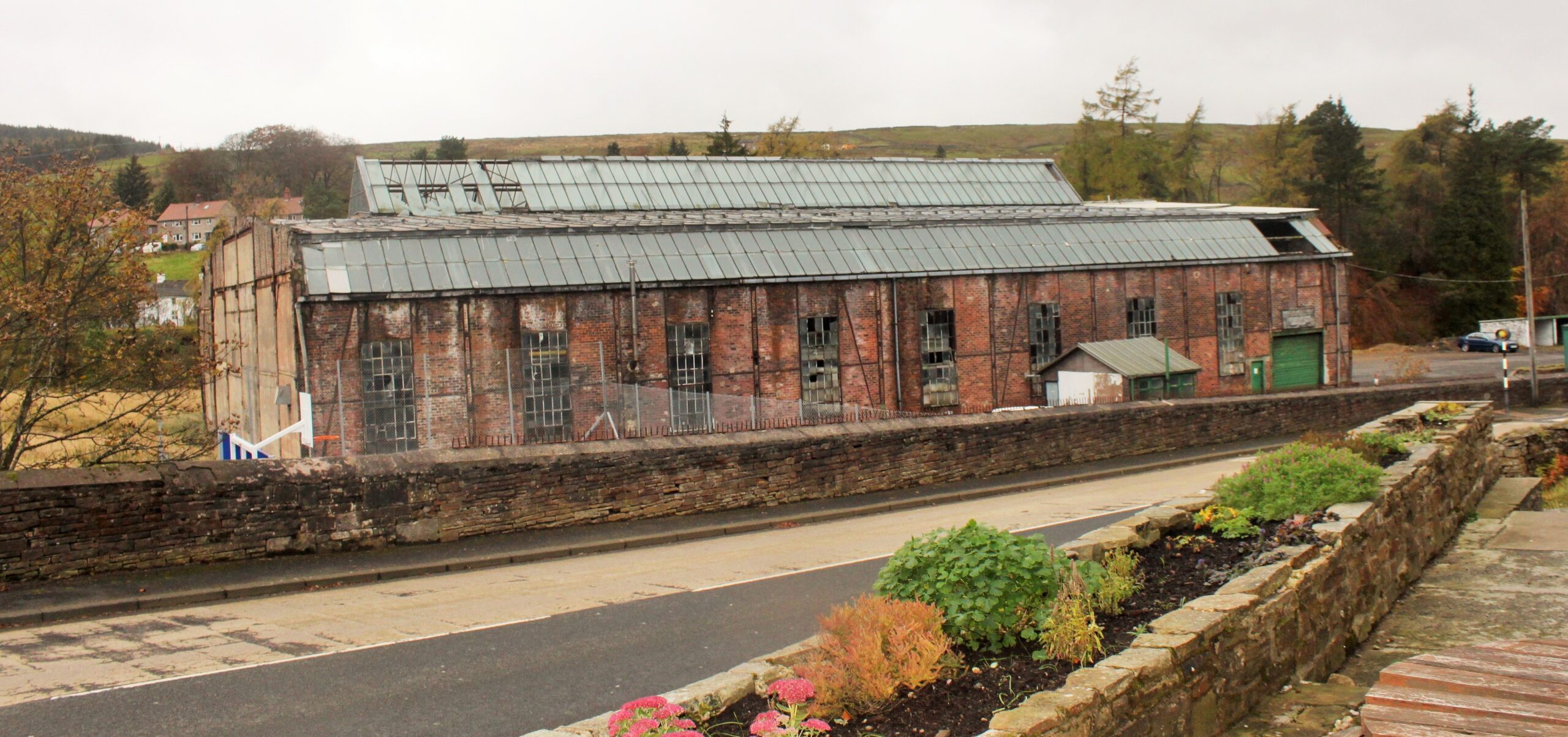
What? What’s ended, what’s gone?
It is – it was – the last link to lead mining in Cumbria, after 2,000 years or more.
The headline photo shows what was left, until October 2018, of what was the largest building in (historic) Cumberland, when it was built in 1909: the Rampgill Mill in Nenthead, way up in the high Pennines, in which locally-mined ore was crushed and processed.

Deterioration of the original “high” building led to demolition of this part in 1967 … leaving the adjacent single-storey (but still huge) shed. This also deteriorated, becoming unsafe to work in, which led to the recent full demolition.
So, what’s the story? What was so significant about this building? We need to look at “the other Cumbria”, outside the National Park, away from the honey pots. The huge expanse of North Pennine moors has provided a wealth of underground riches for thousands of years: mainly lead (with silver as a “contaminant”!), and more recently, zinc.
The Romans knew about the lead, an important product for them: used for pipes and waterproofing. They established a fort near to Alston – “Epiacum” – which scholars now consider was the destination of the main route north from Chester, so valuable was the mined metal. Undoubtedly, this fort oversaw the extraction and shipment of the ore. The Romans left Britain in a hurry, around 400 AD … but the lead was still there, and the mines continued to be worked.
Fast-forward to after the Norman Conquest, to the time of Henry I, when Alston Moor was owned by Scotland, albeit that the English Crown retained the mineral extraction rights. Even though the rivers flow eastwards, geographically linking Alston Moor to Northumberland (hence local names of moors and rivers, rather than fells and becks) the silver content in the lead was made into coinage in the Royal Mint in Carlisle – explaining Alston’s commercial link westward: the reason why Cumberland takes an “Alston-sized” chunk out of Northumberland.
Another jump in time, leapfrogging over centuries of border instability, to the mid-/late-18th century: the manor was now owned by the Royal Hospital at Greenwich, who sold mining leases to the London Lead Company. Alston’s population shot-up to 7,000 in 1835, as the area’s mineral wealth was exploited. A turnpike road was built (by John McAdam, the famous name in road construction); a branch line connected to the Newcastle and Carlisle Railway; even an underground canal was started … it was a boom time: “Cumberland’s Klondike”.
But booms generally don’t last, and Alston’s/Nenthead’s was no exception. The value of lead, globally, had always fluctuated; but in the 1870’s, its price crashed. Consequently, in 1882, the London Lead Company departed. Its mining leases were eventually sold to the Belgian-owned zinc mining company, Vieille Montagne (VM) – who set about converting the local mines to zinc extraction. This led to a resurgence of Nenthead’s (and Alston’s) fortunes.
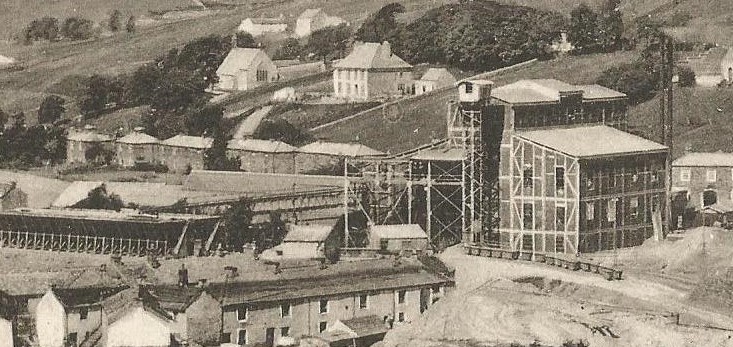
VM invested substantially, both in mining equipment and new developments below-ground, as well as building the huge “ore dressing mill”, pictured earlier and below, in 1909. This was innovatively structured: it had a steel frame (imported, as a kit of parts, from Germany), and the brickwork was only “cladding”, not load-bearing (the traditional type of structure).
The building and the machinery housed inside were amongst the marvels of the age. Imagine what it must have been like to be faced with this massive building, fully 5-6 storeys high, if what you were used to looking at was no bigger than a large storage barn.
Also, let’s not forget that “the foreigners in the hills” (Belgian, German, Swiss, Italian, French and Hungarian workers) pre-dated the “free movement of labour” in the Common Market/EEC/EU by about half a century. Nenthead led the way.
But the zinc market continued on its roller coaster, through the First World War, then the 1920’s Depression … and then – after the upheavals after the Second World War – VM were forced to sell-up, leaving Nenthead in 1945.
There being no use for such a large building, it fell into disrepair. It was nearly all flattened in 1967, though Wright’s Coaches got in just in time, to acquire just the low building as a coach garage and maintenance facility. This usage continued off-&-on until September 2018, by when the dilapidation had become so severe, and the building so dangerous to be inside, that the Health & Safety Executive were forced to impose a full demolition order.

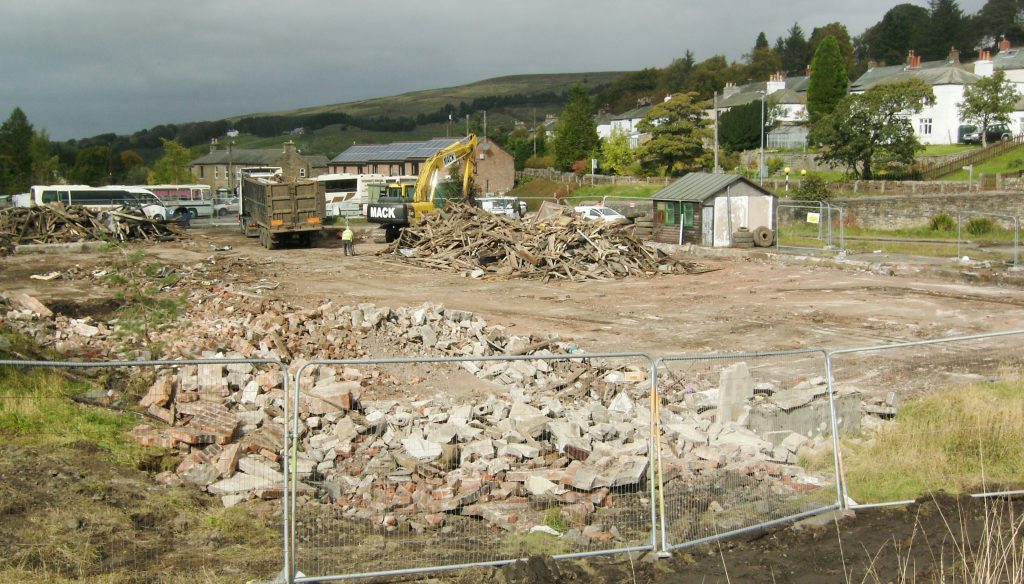
Bringing us to a rather down-beat, non-poetic, end. An end to one of those tales of how Cumbria punches above its weight, centred this time on Nenthead (behind the back of beyond). An era which has now disappeared, with very few traces.
For those interested: the nearby mines, which produced the raw material for the Rampgill Mill building, have Open Days, when visitors can go inside the (conserved) workings. Also nearby is Killhope Mining Museum, open daily April-October (but check website for full details), for a flavour of life as a miner.
Nenthead Mines Conservation Society – http://www.nentheadmines.com
Killhope Mining Museum – http://www.killhope.org.uk/
(Main photo by Peter MacGowan; others by kind permission of Alastair Robertson and Peter Jackson.)
About author
