
No products in the cart.
Return To Shop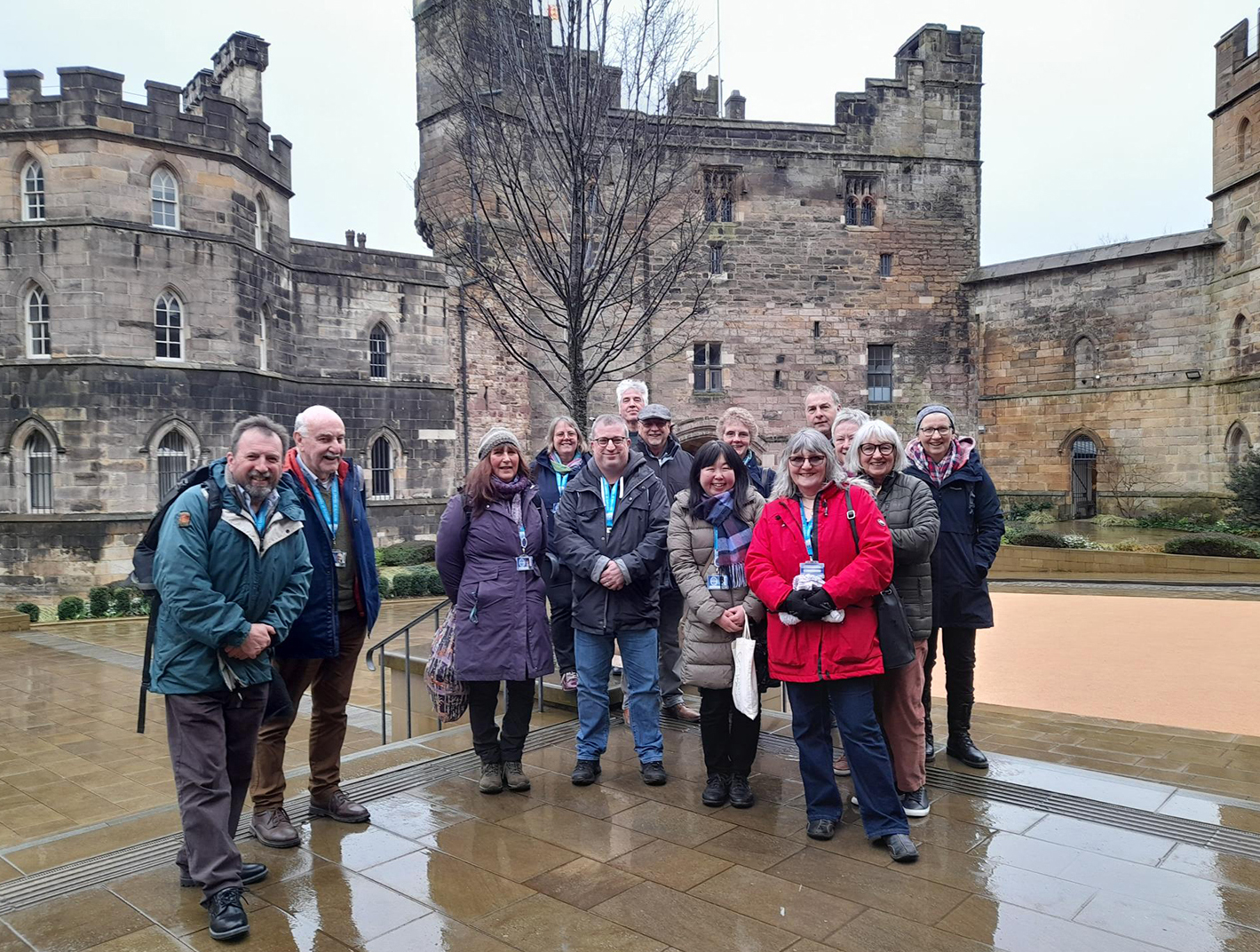
Cumbria is the second largest county in the United Kingdom and therefore as blue badge guides for the region we often have a lot of ground to cover, but despite this fact, occasionally we are asked include in our tours areas that fall just outside the county. And so, with this in mind fifteen of us ventured off on a wet March morning to the historic city of Lancaster to see what the city and surrounding area has to offer its potential visitors. Until government’s county boundary changes in 1974, Lancaster was the county town of Lancashire, and as organiser Geoff Cook pointed out in his introduction, this was a Lancashire which included a large chunk of what is now Cumbria. This in many ways makes the study of Lancaster’s history very relevant to us as Cumbria guides.
Our day began with a very informative talk by Ros Forster, the council’s Marketing Officer in The Storey (formerly the Storey Institute) , a fine Victorian building built by local architects Paley, Austin & Paley. Ros explained that although the city has not had a staffed tourist information centre since 2022, visitor information is now presented in the form of digital screens and leaflet racks. Ros talked about the many attractions the city has to offer ranging from the castle and judges lodgings, of which more later, to the numerous museums, the Artisan’s 18th century cottage and Williamson Park.
We discover that Lancaster is a great place to shop with 66% of its retail outlets independent as well as an abundance of pubs, cafes and restaurants. Many of these pubs become music venues for the popular October festival and the council owned Williamson Park becomes the venue for both Open Air theatre in the summer and the increasingly popular Highest Point music festival in May. In addition to the open air productions the city also boasts three theatres; the Dukes, The Grand and the Nuffield (at the university) and hosts several festivals including ‘Light up Lancaster’ in November, Vintage by the Sea at the end of August and the Literature festival in March (now in its 45th year).
Clearly there is much to attract the visitor to the city itself, but what of the wider area? Ros explains that she is working on a new tourism website which includes the Morecambe Bay area. The area is set to get a massive tourism boost with the proposed Eden Project, partly funded by the government and partly by private investors and construction is expected to start at the end of this year.
Beyond the town of Morecambe the area is also famous for its nature reserves with no less than 30 designated sites around the bay. The most well-known of these , RSPB run Leighton Moss is set to get a funding boost to improve facilities at its visitor centre.
Ros is clearly a great ambassador for the area and there is is clearly much more she can tell us about its many attractions, however we have to move on from the Storey to discover something of the city’s fascinating history. We begin at the Judges Lodgings Museum, a town house built in 1625 by Thomas Covell, a man famous for locking up the suspects in England’s most notorious witch trial. We are informed by the curator Naomi that the house is passed down to the Coles family who like Covell were sheriffs of the city, but it wasn’t until 1826 that it became the Judge’s Lodgings. Prior to this date travelling judges had to stay in local inns and in some cases private houses. Judges (usually 2 per visit) would come with family, and valets and in addition up to 10 staff were required to run the lodgings, so 40 people may be living there for the two weeks it took for the assize to conclude. Following Naomi’s interesting introduction we are free to explore the museum and our attention is particularly drawn to the abundant examples of ‘Gillows ‘ furniture about the house. Founded in Lancaster about 1730 Gillows became a world renowned high quality furniture manufacturer.
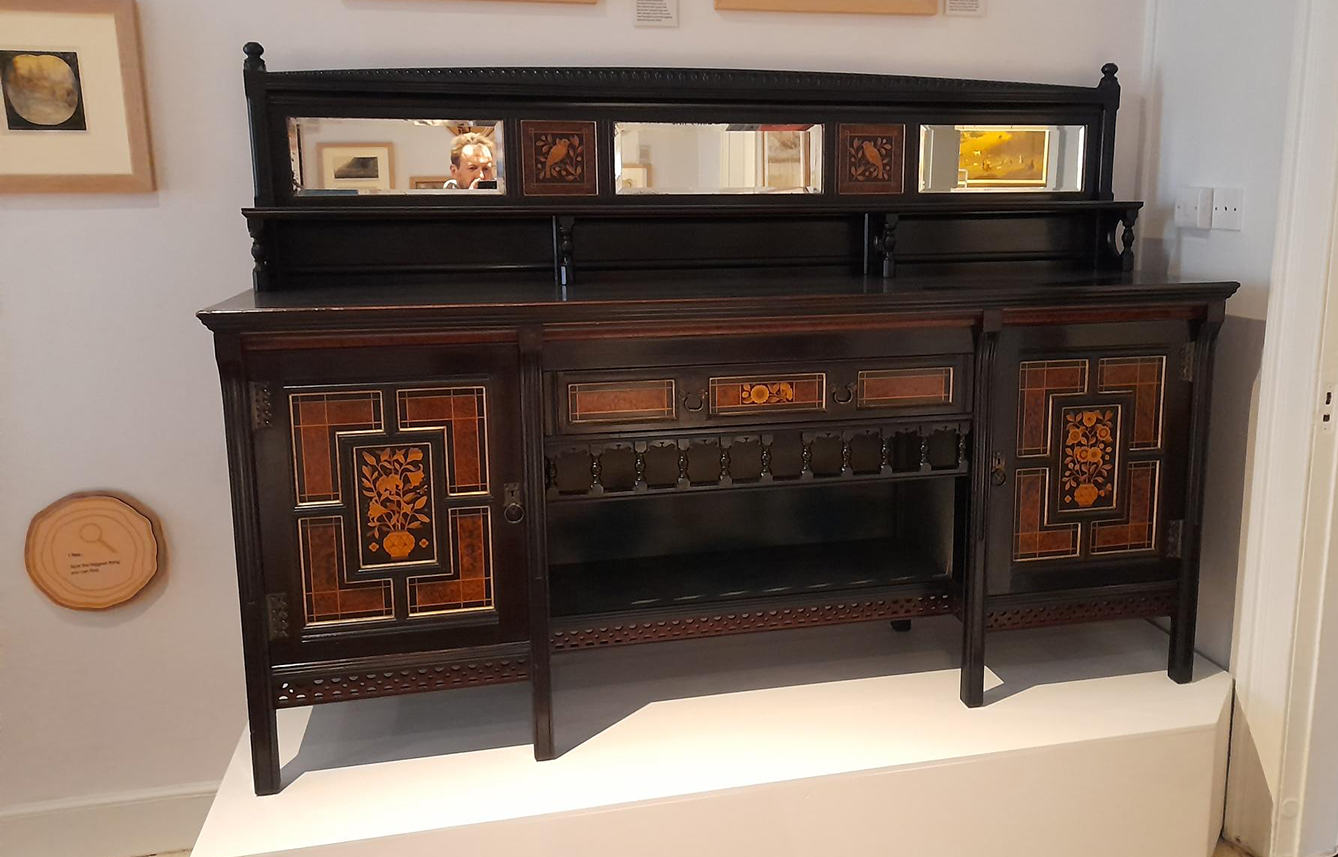
Perhaps the most interesting item on display is found in the Senior Judges bedroom – what appears to be a fine set of drawers, turns out to be, when one of the museums guides lift’s the lid, to be a concealed commode!

After lunch, for some of us in the excellent castle café (run by local coffee roasters Atkinson’s) it is very much time for, the main event. No visit to Lancaster is complete without a visit to the castle, built on the site of the 1st century Roman Fort after which the city gets its name (Lune Chester – the fort by the lune) and dating from the Norman conquest. After passing through the impressive John O’Gaunt gatehouse we enter the courtyard where we meet our enthusiastic and informative guide Victoria Lawson. Victoria explains that the castle was converted into a prison in 1790 and remained a prison until decommissioning in 2012. Prior to the late 1700’s offenders were sent to overseas colonies but the governors of these colonies soon realised that they didn’t want all the characters that Britain wanted rid of and demanded that they be processed in the homeland. Lancaster became one of the country’s first prisons. With this in mind our first port of call is the ‘A’ wing or male penitentiary. This is a Pentonville style prison wing and was added to the castle in the 19th century. Next we visit the ‘C’ wing or female penitentiary. This was built in 1821 and designed by Joseph Gandy who drew heavily on Jeremy Bentham’s ‘panoptican’ concept. The panoptican is semi-circular and in the case of here allows the guards to observe all five floors of cells from one position.
The next part of the tour for me is the most interesting because as someone who grew up in the shadow of Pendle Hill, the stories of Alice Nutter and the trials of the Lancashire witches have always been a fascination. It was with a slight trepidation that we enter the medieval cells where the so called ‘Lancashire witches’ were held prior to trial in 1612. Superstition and fear of witchcraft was rife in the early 17 century following the publication of King James’s book ‘Demonologie’ and this is evident in the shackles we were shown, evidently to stop the witches from flying out of their cells! Some of my fellow guides even got to experience what being locked in would have felt like, a mild panic ensued when Victoria flicked off the light switch plunging them into total darkness!
The final stage of our tour took us into both the of castle court rooms. The magnificent Shire Hall was first up. Completed in 1802 it is also the work of architect Joseph Gandy and contains one of the country’s finest displays of chivalric heraldry. It is still occasionally used as a court mainly for high security cases such as the Birmingham six trial and drug barons, this so that if found guilty the offenders can be taken straight from the court to the prison and thus eliminating the risk of ambush. We learn that the court was used for the trial of the Quaker movement founder George Fox who refused to take his hat off when asked by the judge. Next we moved on to view the Crown court which we are told is the oldest in England after York (opened in 1790). Continuing the macabre theme running through the day we are informed that it was labelled the ‘Hanging Court’ as only London hung more people than Lancaster’s courts. We are fascinated to learn that the phrase ‘money for old rope’ comes from the sections of hanging rope that were once sold as souvenirs to members of the public and that the word ‘hangover’ comes from the fact that people used to go off and get drunk following public hangings. So with the tour concluded we head off back to our cars and trains resisting the lure of the public houses and the potential for hangovers en-route, but certainly in no doubts about Lancaster’s potential as tour destination just a stone’s throw from Cumbria.


About author
